

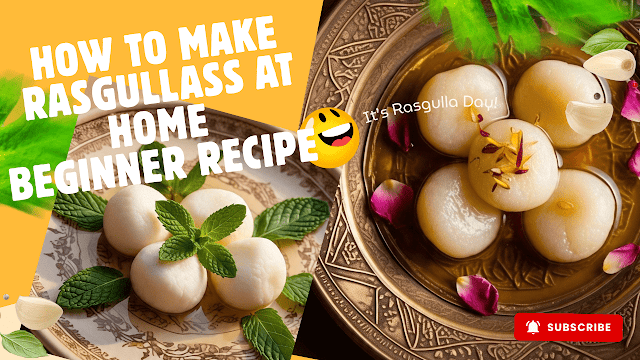
🍥 Rasgulla: The Iconic Spongy Delight of Indian Desserts
 |
| Traditional Bengali rasgullas served in sugar syrup with a hint of rose water |
Soft. Juicy. Melt-in-mouth. A sweet that feels like a hug in every bite.
Introduction
Rasgulla is not just a sweet—it’s a feeling.
This soft, spongy white ball soaked in light sugar syrup is a favorite across India. Its delicate texture and mild sweetness make it loved by all ages.
Whether it’s a festival, family dinner, or a casual craving, Rasgulla brings smiles to every face.
Many believe it was born in Bengal. Others say Odisha. But no matter where it came from, one thing is clear—Rasgulla rules every sweet shop today.
In this post, you’ll find a simple guide to make it at home. Along with helpful tips, easy alternatives, and expert tricks.
Let’s make Rasgulla that is so soft, so juicy… it melts in your mouth and memory.
Why You’ll Love Rasgulla Recipe
- Soft, spongy texture that’s hard to resist
- Uses basic ingredients like milk, sugar, and lemon
- No baking or fancy tools required
- Light on the stomach, yet rich in flavor
- Gluten-free and eggless
- Easy to follow, perfect for beginners
🕒 Preparation Time
| Task | Time |
|---|---|
| Curdling the milk | 10 minutes |
| Draining and resting | 30 minutes |
| Kneading & shaping | 15 minutes |
| Cooking | 25 minutes |
| Soaking time | 1–2 hours |
| Total Time | ~2.5 hours |
Ingredients Needed for Rasgulla Recipe
For Garnish (Optional):
- Saffron strands – a few
- Chopped pistachios or almonds – 1–2 tbsp

Rasgulla: The Iconic Spongy Delight of Indian Desserts
Ingredients
Equipment
Method
- Bring the milk to a boil and slowly add lemon juice while stirring until the milk curdles. Strain through a muslin cloth and rinse under cold water to remove any lemon flavor. Tie the cloth and hang for 30 minutes to drain excess water.
- Transfer the chhena to a plate. Add semolina and flour if using. Knead for about 10 minutes until smooth and free from cracks.
- Divide the dough into equal portions and roll into smooth balls without cracks. You should get about 12–14 balls.
- Combine sugar and water in a wide pot and bring to a boil. Add cardamom powder and rose water and simmer for 5–7 minutes.
- Drop the balls into the boiling syrup one at a time. Cover and cook on medium heat for 10–12 minutes until they double in size and become spongy.
- Turn off the heat and allow the rasgullas to rest in the syrup for 1–2 hours before serving. Garnish with saffron or chopped nuts if desired.
Notes
🥣 Substitutes for Key Ingredients
- Lemon juice → Can use vinegar or curd (yogurt)
- Semolina/Maida → Can skip if chhena is soft enough
- Cardamom powder → Try cinnamon or nutmeg for a twist
- Rose water → Use kewra essence or a drop of vanilla
- Cow’s milk → Buffalo milk also works but gives firmer texture
Serving Suggestions
- Serve warm in winter or chilled in summer
- Garnish with saffron or chopped nuts for a festive look
- Goes great after meals or with evening chai
📍Also Read This
🍥 Rasgulla Recipe
Tips, Variations, Storage, FAQs, and More!
✅ Tips & Tricks for Perfect Rasgulla
🔹 Use fresh full-fat milk only. Toned or low-fat milk won’t give soft texture.
🔹 Knead patiently. Don’t rush. Smooth chhena = fluffy rasgulla.
🔹 No cracks. The balls must be rolled without any cracks. Otherwise, they break in syrup.
🔹 Cook in wide vessel. The rasgullas double in size. They need space to expand.
🔹 Don’t stir during cooking. The balls are delicate. Too much movement breaks them.
🔹 Use light syrup. Thick syrup makes them rubbery. Keep it watery and hot.
🔹 Always soak after cooking. Resting in syrup for 1–2 hours improves taste and texture.
Variations You Can Try
1. Stuffed Rasgulla
Add a tiny filling of chopped dry fruits or saffron in the center while shaping the balls.
2. Chocolate Rasgulla
Add cocoa powder to the syrup or stuff the chhena with chocolate chips.
3. Rose Rasgulla
Add more rose water to the syrup. Garnish with dried rose petals.
4. Nolen Gur Rasgulla (Winter Special)
Replace white sugar with date palm jaggery for a seasonal Bengali twist.
5. Rasmalai
Flatten the rasgullas and soak them in thickened saffron milk instead of syrup.
🧊 Storage & Reheating
- Store leftover rasgullas in the same syrup in a clean, airtight container.
- Keep in the fridge for up to 5–7 days.
- Always reheat gently in a pan or microwave if you want to eat them warm.
- Don’t freeze. It ruins the texture.
❓FAQs About Rasgulla
Q1. Why are my rasgullas hard or chewy?
🔹 Overcooked or under-kneaded chhena can make them tough. Always knead till smooth and cook in light syrup.
Q2. My rasgullas broke during cooking. Why?
🔹 Either the balls had cracks or you stirred the syrup too much. Always roll smooth balls and avoid moving them while boiling.
Q3. Can I use curd instead of lemon?
🔹 Yes. Slightly sour curd also works to curdle the milk. Just use 3–4 tbsp for 1 liter of milk.
Q4. Can I skip maida or suji?
🔹 Yes, if your chhena is smooth and binds well. They’re optional but help beginners get perfect results.
Q5. Are rasgullas healthy?
🔹 They’re lighter than many sweets. High in protein (from milk) and low in fat if eaten in moderation.
Final Thoughts
Rasgulla is pure magic. It’s simple, sweet, and timeless.
Even if you’ve never made Indian sweets before, this one is a great place to start. With a little love and patience, you’ll be surprised how easy it is to make soft, juicy rasgullas at home.
So next time you’re craving something comforting and festive, skip the sweet shop. Your kitchen can do better.
📜 A Sweet History of Rasgulla
The story of rasgulla has sparked many friendly debates.
Odisha claims it was born as “Kheer Mohan” in Puri’s Jagannath temple centuries ago. Bengal, on the other hand, celebrates it as a creation of Kolkata’s sweet makers like Nobin Chandra Das in the 19th century.
No matter who made it first, rasgulla has now become a beloved symbol of Indian dessert culture. A bite of it tells a story of tradition, devotion, and pure joy.